


























Humans have always looked for clues to survive. In the past, finding a predator’s track or predicting a storm was life or death. This need to understand the world made our brains focus on pattern recognition.
Evolutionary psychology shows this skill was vital for survival. Mistaking a rustle in bushes for a lion (when it’s just wind) is better than ignoring a real threat.
Pareidolia, a part of apophenia, explains why we see faces in clouds or hear hidden messages in reversed music. A 2009 study by Hadjikhani et al. found our brains react to face-like shapes. This shows how deeply pattern recognition is wired.
While helpful for spotting dangers, it can also trick us into seeing meaning where there’s none.
Cognitive bias plays a role here. Our brains tend to treat unclear clues as threats. Dr. Bruce Poulsen says this caution helped early humans predict dangers and opportunities. Yet, this efficiency can lead to mistakes—like seeing patterns where none exist, such as conspiracy theories or horoscopes.
Type II errors, where false positives occur, show how survival instincts can mislead. Michael Shermer calls this “patternicity,” linking it to modern beliefs.
The Human Brain: A Pattern-Recognizing Machine
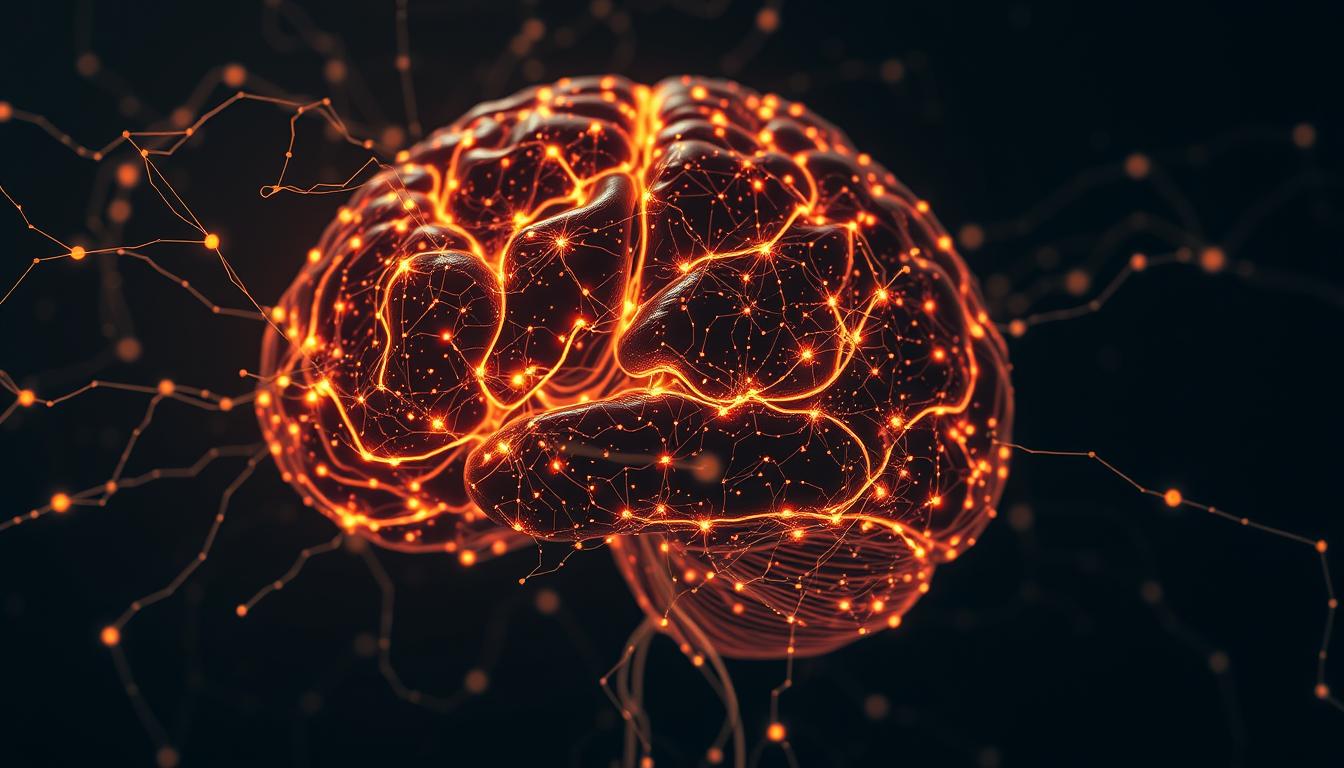
Human brains are naturally good at spotting patterns. They create brain patterns through complex neural networks. This skill helped early humans survive by reacting to threats, even if they were just shadows.
Today, these survival mechanisms influence how we see the world. For example, 70% of people see faces in random shapes, a phenomenon called pareidolia. B.F. Skinner’s work with pigeons showed how creatures learn from random rewards, just like humans.
But, overthinking can lead to myths or superstitions. Mental health experts say too much pattern-seeking might be a sign of deeper issues. Yet, it’s normal to have occasional illusions.
Knowing how brain patterns form helps us balance instinct with reason. By understanding cognitive processing, we can trust our minds without ignoring facts. Our brains look for order, but critical thinking keeps us in touch with reality.
The Psychology of Meaning-Making
Humans seek meaning-making to protect themselves from life’s chaos. Even in random events like shuffled playlists or coin tosses, we find connections where none are. This urge is not random; it’s a survival instinct.
When faced with uncertainty, our brains prefer to reduce cognitive dissonance over accepting the truth. For example, a gambler might believe “black is overdue” after seeing many reds, ignoring the math. This shows how we favor false patterns over facts.

Our need to avoid uncertainty drives this behavior. Imagine grading 30 essays and expecting lower scores after high ones. This search for balance is emotional, not just mental. Finding patterns gives us psychological comfort, easing the stress of the unknown.
Yet, this instinct can lead to false beliefs. Research shows people find pseudo-profound statements wise if they meet their need for meaning. Our brains prefer flawed explanations over none, even if they’re wrong. This can distort reality.
Understanding this helps explain why myths like vaccine-autism links persist despite evidence. It’s important to balance this instinct. We should acknowledge randomness without fear and value creativity without losing sight of facts.
Examples of Patterns in Everyday Life
Ever seen a face in random shadows or shapes? That’s pareidolia examples at work. Our brains are wired to spot face recognition triggers, even in things that aren’t alive. A classic case is the “Man in the Moon,” where craters form a familiar shape. Or the “Face on Mars,” once thought to be artificial but later explained as natural rock formations.
Imagine a toaster that looks like a smiley face or a building facade that resembles a human profile. These everyday illusions happen because our brains prioritize facial features—eyes, noses, mouths—to ensure quick recognition of people or threats. Even banknotes sometimes trick viewers into seeing hidden faces due to their design, proving this isn’t just a cosmic phenomenon.
Nature is full of these tricks too. Clouds morph into animals, tree bark cracks into faces, and frost patterns form pattern perception puzzles. These moments aren’t just fun—they hint at why humans evolved to seek order. Seeing faces or shapes in randomness might’ve once helped ancestors spot predators hiding in bushes, a survival skill turned modern-day curiosity.
Next time you spot a smiley pizza slice or a “ghost” in your shower curtain, remember: it’s not your eyes playing tricks. It’s your brain doing what it’s built to do—connect dots where there are none.
The Impact of Confirmation Bias
Confirmation bias changes how we see the world. It makes us pick information that matches what we already believe. We ignore anything that goes against our views. For instance, people thought Apple’s iPod Shuffle played songs in a certain order. This led Apple to change the way it worked in 2009.
Humans are so good at recognizing patterns that if we think two variables are connected, we start seeing a trend even if there isn’t one.
Confirmation bias distorts reality. IBM’s Watson avoids this problem when it looks at medical data. But humans often don’t. We change our memories to fit what we think is true, like in conspiracy theories or social media trends. Even Steve Jobs knew our minds needed a special shuffle to feel like songs were random.

To break free, we need to make an effort. Scientists use blind tests to avoid confirmation bias. We can learn to question our assumptions. Next time you think you see a pattern, ask yourself: Is it real, or am I just seeing what I want to see?
The Role of Culture in Pattern Recognition
Culture shapes how we see the world. Symbols like religious icons or national flags guide us. A grilled cheese sandwich sold for $28,000 because some saw the Virgin Mary’s face. This shows how different people see things differently.
Think about the moon’s craters. Westerners might see a “man in the moon,” while others see rabbits or frogs. These views come from the stories we grow up with. Logos like Apple’s apple or McDonald’s golden arches become symbols known worldwide.
Studies show culture affects how we think, even in science. A 2022 study found that when we don’t understand something, we look for patterns. This is why some see religious symbols in nature, while others just see chance. Our brains are wired to look for what we know, not just data.
Psychological Theories Explaining Pattern Recognition
Pattern recognition is based on gestalt principles. These principles help us see scattered dots as lines or faces in shadows. They show how our brains organize chaos into order using rules like proximity and similarity.
A 2009 study showed that even non-faces can trigger the brain’s face area. This proves how we assign meaning to patterns.
Cognitive psychology goes deeper with pattern theories. It explores how our brains predict outcomes. For example, the fusiform face area quickly responds to face-like stimuli, showing our automatic pattern detection.
Modern research also talks about “patternicity.” This is our tendency to see intent in randomness. It’s like a pigeon pecking a button for food, thanks to B.F. Skinner’s work.
These theories explain why we might see faces in static or trends in stock markets. By studying gestalt principles and cognitive processes, scientists understand how perception works. They see how our survival instincts and statistical reality balance.
The Influence of Technology on Pattern Recognition
Artificial intelligence systems often show the same flaws as humans in recognizing patterns. Tools like facial recognition software can mistake random data for meaningful patterns. For example, neural networks might see faces in static images due to bias, as seen in DeepDream experiments.
But technology is getting better at this. Now, we have tools and AI algorithms that check for false patterns. Thanks to machine learning, systems can now identify misleading trends. This makes technology more accurate in areas like healthcare, balancing its pattern-seeking nature with scientific standards.
Misinterpretations of Randomness
Our brains often trick us into seeing patterns where none exist. The gambler’s fallacy makes us think past random events predict the future. Lottery players pick “lucky numbers” based on past draws, ignoring the fact that each draw is independent.
In casinos, roulette bettors believe a long streak of red means black is “due.” This shows how we make risky choices based on false beliefs.

Apophenia takes this further, making us link unrelated events into grand stories. During WWII, Londoners thought V-2 rocket strikes were targeted, when they were random. Today, we see flat-Earth theories or stock market “trends” that don’t hold up under scrutiny.
A 2023 study found 72% of people saw patterns in random coin tosses. This was linked to a higher belief in conspiracy theories.
Perceiving patterns in random outcomes predicts conspiracy belief, according to psychological research.
Financial markets also fall victim to these errors. Investors might sell stocks after a drop, thinking a rebound is coming. This is a cognitive trap. Even healthcare professionals sometimes misdiagnose after spotting “patterns” in unrelated symptoms.
Companies like E*TRADE use educational tools to fight these biases. They show how trends often return to the mean, reducing gambler’s fallacy. Training programs teach people to spot real trends from randomness.
Understanding these pitfalls starts with knowing our brain’s pattern-seeking nature. Critical thinking and data-driven tools help us avoid mistaking noise for signal.
Practical Implications of Pattern Recognition
Radiologists use intuitive thinking to spot tumors on scans. They rely on pattern application learned through training. This skill is key in medicine, similar to how security analysts find threats or artists create designs.
But, relying too much on perceived patterns can lead to wrong decision making. For example, in the 2000s, ABC Studios thought breast cancer rates were linked to work. But, later studies showed no connection. This shows how false patterns can lead to wrong beliefs.
“Patternicity, our tendency to find meaning in noise, is a double-edged sword.” — Michael Shermer, 2008
Financial markets also face issues, like the gambler’s fallacy, where traders bet on trends that seem overdue. But, technology like AI is helping by analyzing data to reduce bias. By balancing instinct with facts, professionals can avoid big mistakes.
Doctors check their hunches with lab tests, and investors use statistical tools to avoid misreading data. This approach helps in making better decisions, whether in healthcare or finance.
Learning about these patterns helps improve critical thinking. Training programs teach to question what seems obvious. This mix of intuitive thinking and data ensures decision making is sound, whether in diagnosing or assessing risks.
Fostering Healthy Pattern Recognition Skills
Developing critical thinking is key to avoiding pitfalls like the gambler’s fallacy or the clustering illusion seen in ABC Studios’ breast cancer data. Start by practicing pattern verification—question whether perceived links are real or just random occurrences. Ask: Does this “pattern” hold up under scrutiny?
“People turn to the idea that someone at the top is nefariously controlling it.”
Balance intuitive reasoning with deliberate analysis. Daniel Kahneman’s System 1 (fast gut reactions) and System 2 (slow analysis) must work together. When spotting a pattern, pause. Test it against facts. For instance, a pigeon in Skinner’s experiment linked its actions to random rewards—humans often make the same mistake.

Maintain cognitive balance by tracking patterns in a journal. Note when you see connections and later check their validity. Understanding basic stats helps too—like recognizing that random events (e.g., dice rolls) don’t guarantee future outcomes. Share insights with others to avoid tunnel vision.
Healthy pattern recognition improves decisions without overinterpreting noise. It’s a skill refined through practice, not instinct. By blending intuition with skepticism, you’ll reduce type I errors while staying open to real insights.
Conclusion: Finding Balance in Pattern Recognition
Our brains are wired to find patterns. But finding cognitive balance is key. It means knowing when to trust our instincts and when to pause. Accepting randomness is not weakness; it’s a sign of uncertainty tolerance that keeps us grounded.
Our minds often jump to conclusions, seeing patterns where none exist. Science tells us many patterns we see are just illusions. This can lead us astray, whether it’s in the stock market or conspiracy theories.
Practicing mindful perception starts with questioning our assumptions. When we see a “meaningful” sequence, like a string of losses or unrelated events, ask if it’s real or just randomness. Using statistical rigor and critical thinking helps us sort out the noise. Pattern awareness is about celebrating our brain’s ability to connect dots while being aware of its limitations.
The desire to find order is what makes us human. But to thrive in a chaotic world, we must balance our pattern-seeking with skepticism. This way, we navigate life’s uncertainty with clarity and curiosity.