


























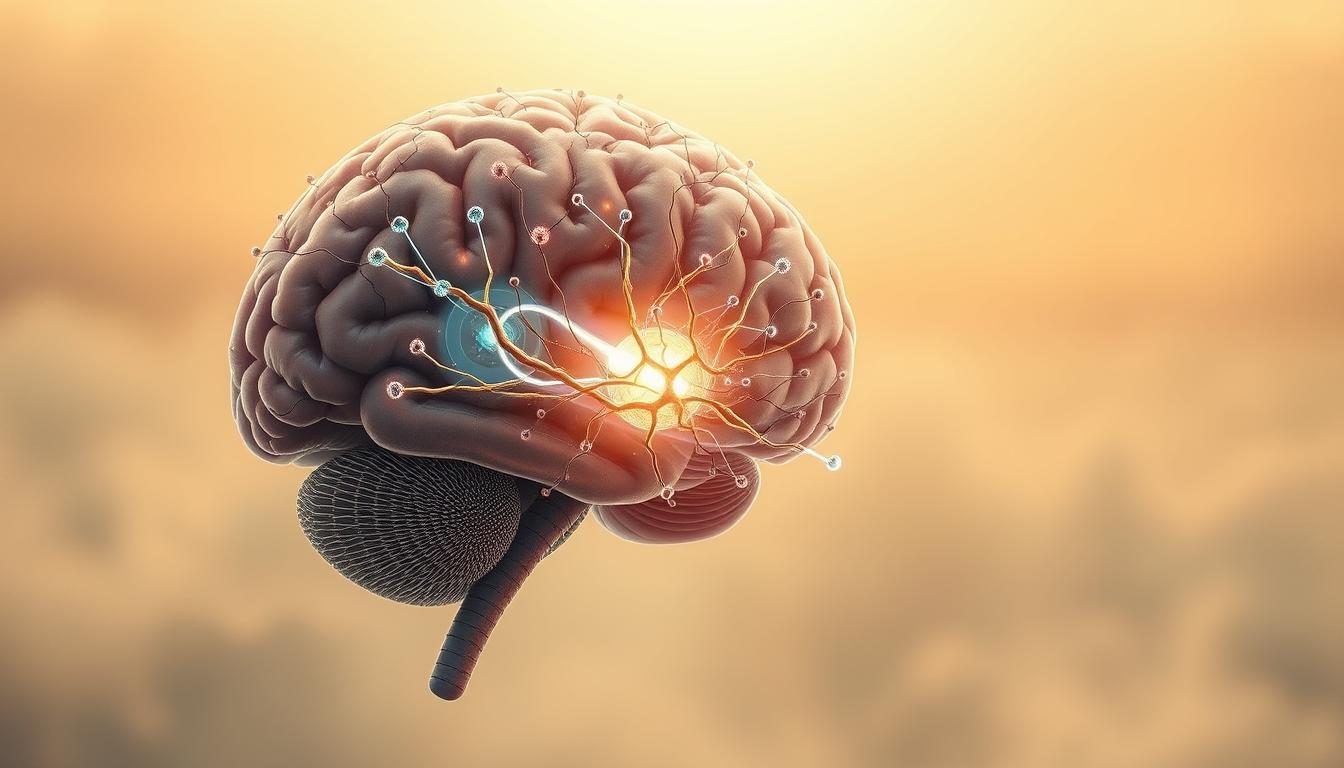
Every night, your brain does a quiet cleanup. It sorts through your daily experiences, deciding what to keep and what to forget. This process is guided by how emotionally charged the moments were.
The brain remembers intense highs and lows more than anything else. This is because these moments leave a stronger mark on our minds.
Recent studies show the hippocampus acts like a librarian. It tags important memories for keeping. While we sleep, it strengthens connections for key moments.
These memories then move to long-term storage in the neocortex. It’s like organizing files in a filing cabinet.
Why do some experiences stick in our minds? The brain focuses on emotional intensity and newness. A sudden surprise or a deeply moving moment triggers the amygdala.
This releases stress hormones that help us remember. This is why unforgettable trips or key conversations stay with us long after they happen.
Understanding how the brain filters memories gives us insights. We’ll explore how emotional peaks, neural pathways, and daily routines shape what we remember. And why.
The Science of Memory Formation
Every memory starts with the memory formation process. The brain encodes memories by linking neurons through synaptic connections. These neural pathways form neural networks, storing experiences as patterns of brain cell communication.
The hippocampus acts as a central hub, filtering which signals become lasting traces. Repeated use of a memory strengthens these links, turning fleeting moments into long-term storage.
“When the brain is idle, sharp wave ripples shout to the rest of the brain that this memory is important and needs to be tagged for storage later that evening.”
Emotional experiences speed up this process. The amygdala, the brain’s emotional alarm system, boosts emotional encoding by releasing chemicals like adrenaline. This emotion memory connection ensures events tied to strong feelings—like a first date or a sudden accident—become deeply etched.
Studies show fear or joy trigger dopamine surges, amplifying emotional memory formation. Even brief emotional spikes can permanently alter synaptic strength.
These systems prioritize survival and significance. By merging memory and feelings, the brain ensures critical moments outlast trivial details. This dance of neurons and memory explains why a childhood birthday or a sudden scare might stay sharp decades later, while yesterday’s commute fades.
The brain’s chemistry ensures only the most impactful experiences gain permanent space in our neural architecture.
Types of Memories We Hold On To
Memories are not all the same. Our memory storage types sort them out like a filing system. Working memory deals with tasks we need to do right away, like remembering a phone number. Then, these memories either fade or move to long-term memory systems.
How long we keep a memory depends on its importance to us. Our brain decides this based on how valuable it is to us.
“If they got the treasure, they were more likely to remember the random object they passed along the way.”
Think about a milestone memory like your first day at school. These life-changing events stick with us because they’re full of emotion and details. They become part of our autobiographical memory, shaping who we are.
On the other hand, daily recollections like brushing teeth or driving a familiar route fade fast. But, if something unusual happens, like a flat tire, that day might become memorable.
Even mundane memories can stick if they’re tied to rewards or surprises. Our brain chooses what to remember, like a childhood birthday party over yesterday’s lunch. Episodic memory keeps these personal moments, while routine memory handles habits without needing us to think about them.
Sleep also plays a role. During rest, sharp-wave ripples help memory duration for important events.
The Role of Emotions in Memory
Emotions play a big role in how we remember things. The amygdala, our emotional brain center, works with the hippocampus to make memories stronger. When we feel fear or joy, our brain makes chemical changes that help us remember better.
For example, almost everyone remembers where they were when JFK was assassinated. This shows how big emotional events can leave a lasting mark on our memories.
Research shows that emotions help us remember sensory details better but might make us forget other things. A person who was in a car accident might remember the sounds but not the color of the road. This shows how our brain focuses on what’s emotionally important.
Our brain naturally forgets some things, but it can struggle with forgetting traumatic events. This is why people with PTSD might remember scary memories too well.
“Emotional arousal heightens attention, but not all details stick,” says research on episodic memory. Participants remembered a snake’s appearance but forgot decisions made during the encounter, showing how emotional focus sharpens some details while others vanish.
Our brain has ways to protect us from painful memories. Stress hormones like cortisol help us remember at first but can hurt our memory over time. But, therapy can help us see traumatic memories in a new light. This way, our brain can keep important memories safe while letting go of the rest.
Context and Memory Recall
Our surroundings and mindset greatly affect how well we remember. Context-dependent memory means we recall details better in the same setting. Studies found people remembered 81.8% of scenes in the same environment, but only 71.8% when it changed.
Environmental cues like a classroom’s layout or background noise become hidden memory triggers. They help the brain find stored information. This situational memory relies on matching conditions to unlock details.

“Sharp wave ripples during rest are vital for memory processing,” says neuroscientist Buzsáki. This explains why breaks help memory activation, linking pauses to better recall.
Sensory details act as recall prompts. A childhood smell or song can instantly revive past moments through associative memory. When learning, varying study locations builds multiple cues.
This helps the brain form neural paths tied to each setting. It makes it easier to retrieve facts when one cue isn’t available.
Stress disrupts this system. Cortisol blocks memory pathways, but calm environments boost access to stored info. By linking new info to sensory cues like music or locations, anyone can improve memory retrieval.
The brain’s natural context-dependent memory system shows how small details—like a familiar chair or scent—help unlock forgotten moments.
Memory Consolidation Process
While you sleep, your brain is busy strengthening and organizing memories. It goes through two main phases: slow-wave sleep for facts and REM sleep memory for emotions. The hippocampus replays your day’s moments through sharp wave ripples.
“These ripples are the brain’s way of practicing what matters,” says neuroscientist György Buzsáki. “They’re just as vital as learning itself.”
“The brain is rehearsing,” said Lila Davachi of Columbia University, describing how neural pathways fire faster during rest. “This replay cements fragile memories into lasting knowledge.”
Studies show memory integration happens fastest at night. A 2010 study by Michael Zugaro found ripples repeat experiences at ten times real-time speed. This helps memory reinforcement.
Daytime practice also gets a boost. Techniques like spaced repetition, which use intervals, match the brain’s natural practice effect. This memory strengthening method mirrors how neurons replay events during sleep.
REM sleep also has a special role. It helps link new information to what you already know. This memory integration turns isolated facts into a complete understanding. So, when you “sleep on a decision,” your brain is already working hard.
Quality rest and study breaks are key for lasting recall. They create the perfect conditions for your brain to remember.
The Importance of Relevance and Personal Connection
Our brains act like curators, favoring value-based memory that aligns with personal significance. The brain’s memory prioritization system naturally highlights meaningful memories, such as a first job or a vacation. It fades less relevant details. This preference isn’t random—it’s rooted in how our goals and interests shape neural pathways.
Activities that involve experiential learning, like cooking or hiking, create stronger participatory memory than passive tasks. Active engagement triggers multisensory processing, embedding experiences deeper. Imagine learning guitar chords: your brain links touch, sound, and emotion, making the skill stick better than memorizing theory alone.
“If you watch a movie and would like to remember it, it’s better to go for a walk afterwards. No double features.”

Neuroscientist György Buzsáki explains that post-activity pauses—like a walk after a film—allow memory through doing to solidify. During these breaks, brain waves called sharp-wave ripples help transfer fleeting thoughts into lasting traces. This process mirrors how we naturally prioritize events that feel personally significant.
Applying this science, learners can boost retention by linking new info to passions. A gardener might recall plant care steps effortlessly but forget unrelated data. To enhance meaningful memories, connect studies to hobbies or career goals. Breaks between study sessions also mimic the brain’s need for consolidation, avoiding the “cramming trap” that overwhelms memory pathways.
Forgetting: A Necessary Process
Forgetting isn’t a flaw—it’s a survival strategy. Our brains use adaptive forgetting to filter out what’s not important. This prevents memory decay from overwhelming us.
Imagine storing every detail, like the hum of a fan or the color of a stranger’s shoes. Without memory filtering, our minds would be too full. The brain focuses on what’s essential, like remembering passwords or a friend’s birthday.
The forgetting curve shows how fast we forget unused facts. Within an hour, 56% of new information is gone. This number jumps to 75% within a week.
This memory optimization makes room for new learning. Interference theory explains why old habits can get in the way of new ones. For example, forgetting an old PIN for a new one.
Sleep helps strengthen this process. It lets the hippocampus sort out what’s important from what’s not.
“The brain’s selective retention ensures survival. It’s not a flaw—it’s a strategy.”
Embracing forgetting makes us more adaptable. It helps us avoid getting stuck in old ways. Techniques like mindfulness or spaced repetition help keep important memories sharp while letting go of the rest.
Next time you forget something small, remember: it’s your brain optimizing, not failing.
Cultural Influences on Memory
Cultural memory frameworks shape how we remember things. Studies show big differences between North Americans and East Asians. North Americans tend to remember specific details, like self-focused childhood events. East Asians, on the other hand, focus on social interactions and emotional contexts.

These differences show how culture influences memory. East Asian participants often remember group activities, while North Americans recall individual achievements. This starts early, with children from collectivist cultures remembering shared experiences more than personal ones.
Shared memories help create community remembrance and group identity. Schools, media, and rituals play a big role in shaping these memories. A 2004 study by Wang found that East Asian young adults remember family or community events more than American peers remember personal achievements.
These insights are important for education. Teaching methods should match cultural preferences. Some benefit from rote memorization, while others do better with context-based learning. Recognizing these differences celebrates diversity and explains why memories vary across cultures.
The Effects of Technology on Memory
Technology changes how we remember and recall life’s moments. Studies show millennials forget daily tasks twice as often as seniors. This suggests digital memory effects. Our brains now rely on devices for remembering facts, a process called memory outsourcing.
Research by Sparrow et al. found we remember where to find info online, not the info itself. This is known as the “Google effect.” It shows how technology cognitive impact changes our memory and knowledge storage.
Sharing photos online creates digital reminiscence, but it can have downsides. Henkel’s 2014 study found museum visitors who took photos remembered fewer details. This shows our brains might not process information as deeply when we use cameras.
GPS use has also been linked to poorer spatial memory in studies by Dahmani and Bohbot. This shows how technology changes our brain’s pathways.
Social platforms turn personal online memory curation into shared experiences online. Posting vacation snaps or event updates builds collective digital memory. But, it can also blur reality.
Tamir’s research noted how editing shared moments online can distort personal recollections. Yet, these platforms also preserve group memories, like viral reactions to global events.
Balance is key. While tech makes recalling facts easier, we must use it mindfully. Remembering where info is stored isn’t inherently bad. But forgetting to engage deeply with life’s moments might be.
Memory Techniques to Enhance Recall
Want to boost your memory? Memory enhancement methods like the memory palace technique tap into your brain’s spatial memory system. This ancient method turns abstract facts into vivid mental imagery in familiar places. Picture walking through your home, leaving important details at spots like the front door or kitchen table.
Studies show this location-based memory activates key brain areas, like the hippocampus. This makes remembering things easier.

Try the visualization memory technique for names or lists. Create wild mental images, like a flamingo riding a bike for “biology class.” Association memory tricks link new info to what you already know. For example, remember “Paris, Tokyo, Sydney” by picturing famous landmarks together.
These mental mapping strategies build stronger neural connections than just repeating information.
Simon Reinhard, a top “memory athlete,” memorized 240 digits in order using these methods. Even beginners can start small. Use your daily commute as a spatial memory system to remember tasks. Add sleep to the mix, as it helps consolidate memories. Your brain is already using these pathways; now, train it to work smarter!
Exploring Memory Loss and Its Causes
Stress or not getting enough sleep can make us forget things. But not all forgetfulness means we have a serious problem. As we age, our memory might slow down a bit, like forgetting names. This is different from the memory loss caused by diseases like Alzheimer’s.
There are many reasons why we might forget things. It could be because of medicines, not enough vitamins, or feeling down. Brain aging can also play a role, affecting how we process information. But, there are things we can do to help our brains stay sharp.
Exercising regularly can help keep our brains healthy by improving blood flow. Eating foods full of antioxidants and omega-3s helps our brain connections. Getting enough sleep is also key for keeping memories strong. Staying active and learning new things can also help slow down brain aging.
While some memory loss is normal, sudden forgetfulness needs a doctor’s check-up. Early treatment can help with problems like thyroid issues or side effects from medicines. Knowing what causes memory loss helps us take care of our brains better.